

You have watched the aesthetics industry grow, and you have wondered whether there is a place in it for you. There is, and the route in is more accessible than most people realise.
Learning how to become an aesthetic practitioner is the first step to a career that offers flexibility, strong earning potential, and the satisfaction of helping people feel more like themselves. At Empire Medical Training Academy in Oldbury, we train both complete beginners and qualified medics, so the pathway you take depends on where you are starting from, not on whether the door is open to you.
At a glance
- Aesthetic practitioners deliver non-surgical treatments such as anti-wrinkle injections, dermal fillers, skin treatments and thread lifts.
- No single legal qualification is required, though injectable treatments involving prescription medicines require a prescriber.
- Both a Non-Medic (Beginners) and a Medics (Advanced) pathway are available.
- Courses run in a one-day intensive format with live model practice.
- Students receive 20% off all training courses.
What Does an Aesthetic Practitioner Do?
An aesthetic practitioner delivers non-surgical cosmetic treatments, such as anti-wrinkle injections, dermal fillers, skin treatments and thread lifts, to enhance a person’s natural features and support their confidence.
The day-to-day is a mix of consultation, treatment, and aftercare. You assess what a client is hoping to achieve, you talk honestly about what is realistic, and you carry out the treatment safely.
Good practitioners are part clinician and part listener. The technical skill matters, but so does the ability to guide someone who feels nervous or unsure. That balance of safety and artistry sits at the centre of how we train.
Do You Need a Medical Background to Become an Aesthetic Practitioner?
No, single qualification is currently required by law to perform non-surgical aesthetic treatments in the UK, though injectable treatments involving prescription medicines require a prescriber, and proper training is strongly recommended for safety and credibility.
Here is where most guides quietly turn beginners away. A lot of training providers assume you already work in healthcare, and some suggest the only honest route is to go and qualify as a nurse first.
We see it differently. Our Non-Medic (Beginners) pathway is built specifically to open this industry to people arriving from beauty, retail, admin, or an entirely different field. You do not need a medical degree to begin, you need the right training, hands-on practice, and a provider who prepares you to work safely and within the rules.
For qualified medics, the picture is different again. If you are a doctor, nurse, dentist, or pharmacist, you already hold the clinical foundation, and your training focuses on advanced protocols and more complex treatment areas.
The Two Routes Into Aesthetics
There are two main routes into aesthetics: an entry-level pathway for non-medics with no prior clinical background, and an advanced pathway for existing medical professionals extending into aesthetic medicine.
So which one applies to you? Here is how the two compare.
| Career Changer (Non-Medic) | Upskilling Professional (Medic) | |
|---|---|---|
| Who it is for | No prior medical background | Doctors, nurses, dentists and pharmacists |
| Starting point | Foundational safety, technique and business readiness | Existing clinical foundation |
| Course focus | Takes you from zero to genuinely client-ready | Advanced protocols and more complex treatment areas |
| Where to start | Non-Medic (Beginners) pathway | Medics (Advanced) training |

What Training Do You Need to Get Started?
To get started, you need practical, hands-on training from an experienced provider, covering facial anatomy, injection or treatment technique, client consultation, and safe practice.
Theory alone will not make you client-ready. Why does this matter? Because your first paying client deserves a practitioner who has already worked on real people under supervision, not someone who has only read about it.
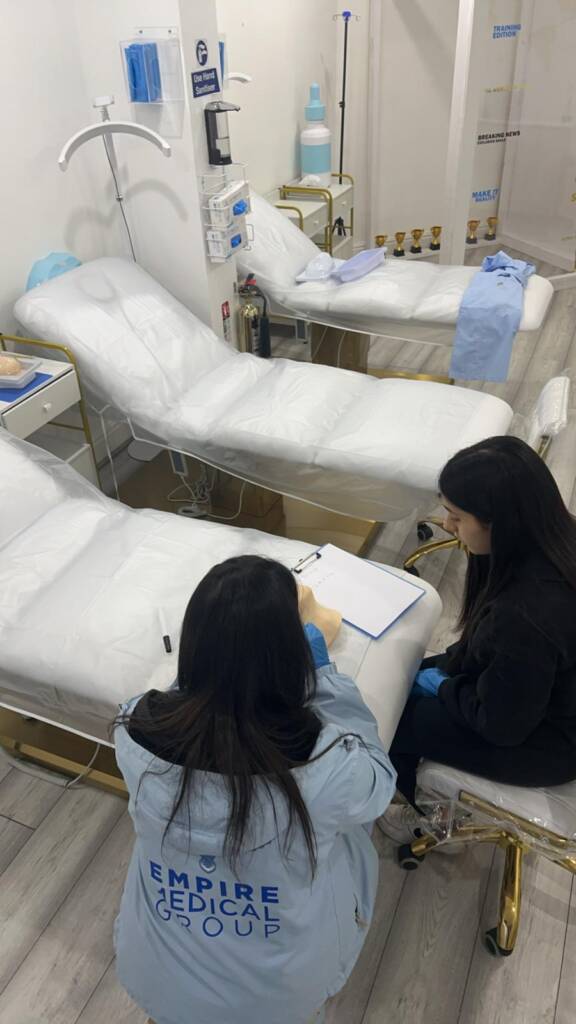
Our courses run in an intensive one-day format, which keeps time away from work to a minimum, and they include live model practice so you build real muscle memory before you go it alone. As an established Aesthetics Training Clinic students trust, we award every one of them a Certificate of Completion following a clinical assessment.
Not sure whether the non-medic or medic pathway is right for you?
View All CoursesWhat Skills Make a Good Aesthetic Practitioner?
A good aesthetic practitioner combines safe clinical technique with an artistic eye, strong communication, and the business skills needed to attract and keep clients.
The technical side can be taught, and we teach it thoroughly. The part many training providers leave out is the business side, and that is often what separates a qualified practitioner from a profitable one.
Our training includes Business of Beauty modules covering client consultation, social media branding, pricing, and insurance, all part of our wider aesthetics training courses. You leave knowing how to treat, and also how to build something that lasts.
How Long Does It Take, and What Will It Cost?
Many aesthetic training courses are delivered in a single intensive day, allowing you to gain a specific skill quickly, with costs varying by course type and depth.
The one-day format is deliberate. It lets you train around your existing commitments and start putting your new skill into practice quickly, rather than stepping away from work for weeks.
On cost, the honest answer is that it depends on the course and how advanced it is. Students with us receive 20% off all training courses, which makes building a full skill set more achievable when you are starting out.
Turning Your Training Into a Career
Once trained and certified, many practitioners go on to work within a clinic, offer mobile services, or launch their own aesthetics business.
This is where the earlier work pays off. The practitioners who do well are usually the ones who trained properly, practised on real models, and understood the business from day one.
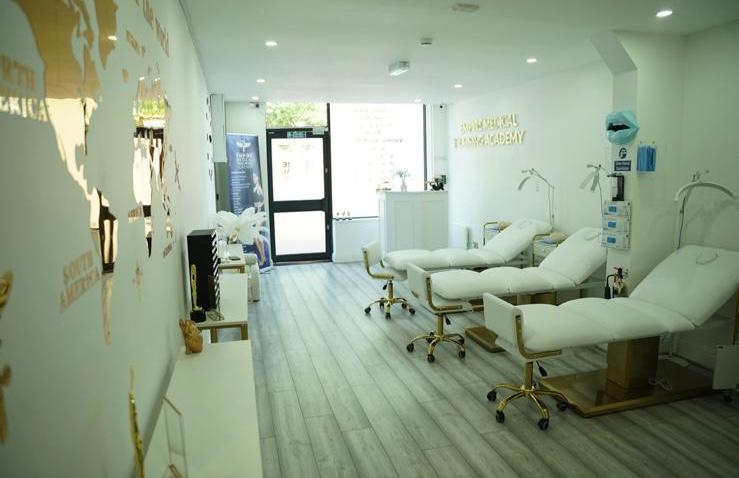
Because we are a working clinic as well as an academy, the people who train you also treat clients every week, and you can learn to inject with our Botox training courses as your next step. If injectables are the direction you want to take, our guide on how to become a Botox practitioner walks through that path in more detail. You learn from practitioners who do this for a living, not just from people who teach it.
Frequently Asked Questions
Do I need a medical background to become an aesthetic practitioner?
No single qualification is currently required by law to perform non-surgical aesthetic treatments in the UK, though injectable treatments involving prescription medicines require a prescriber. Our Non-Medic (Beginners) pathway is built for people arriving from beauty, retail, or an entirely different field, while qualified medics move onto our Medics (Advanced) training.
How long does it take to become a qualified aesthetic practitioner?
Many of our aesthetic training courses are delivered in a single intensive day, which lets you gain a specific skill quickly and start practising without stepping away from work for long. Building a fuller skill set typically means completing more than one course over time.
What is the difference between the medic and non-medic training routes?
The non-medic route is an entry-level pathway for people with no prior clinical background, starting with foundational safety, technique and business readiness. The medic route builds on an existing clinical foundation and focuses on advanced protocols and more complex treatment areas.
What skills do you need to become a good aesthetic practitioner?
A good aesthetic practitioner combines safe clinical technique with an artistic eye, strong communication, and the business skills needed to attract and keep clients. Our training includes Business of Beauty modules covering consultation, branding and pricing, alongside the clinical technique itself.
How much does aesthetic practitioner training cost?
Cost depends on the course and how advanced it is, so it is worth talking through your goals with us rather than working from a single figure. Students receive 20% off all training courses, which makes building a full skill set more achievable when you are starting out.
Ready to Start Your Aesthetic Practitioner Journey?
Whether you are starting from scratch or upskilling as a medic, our one day intensive courses take you from theory to confident, supervised practice. Students receive 20% off all training courses.
Browse All Courses