

You want to learn to inject, and you want to know if the door is actually open to you. It is, and this guide walks you through exactly how to become a Botox practitioner from where you are now.
Anti-wrinkle injections are one of the most requested treatments in the UK, which makes them one of the most in-demand skills for new practitioners. At Empire Medical Training Academy in Oldbury, our Botulinum Toxin training sits within our wider injectables programme, and it is built to take you from theory to confident, supervised practice.
At a glance
- Botox training sits within our wider Aesthetic Injectables Training programme.
- No single legal qualification is required, but reputable training, safe prescribing and insurance are essential before treating clients.
- Courses are delivered in a one-day intensive format, with hands-on practice on live models under supervision.
- Both non-medic (beginner) and medic (advanced) pathways are available.
- Students receive 20% off all training courses.
What Does a Botox Practitioner Do?
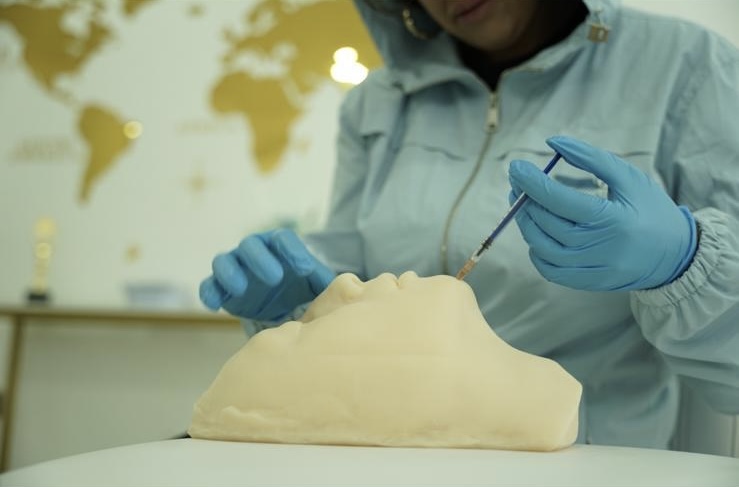
A Botox practitioner assesses a client’s facial muscles and delivers anti-wrinkle injections that temporarily relax targeted muscles to soften fine lines and dynamic wrinkles.
The role is more considered than it looks from the outside. A skilled injector reads the face, plans placement carefully, and aims for a result that looks well-rested rather than frozen.
That restraint is a genuine skill. Our less-is-more philosophy shapes how we teach injecting, because the practitioners clients return to are the ones who deliver natural, balanced results.
Can Anyone Train to Inject Botox in the UK?
If you want to learn to inject Botox in the UK, there is currently no single legal qualification required, but the prescription medicine involved must be prescribed appropriately, and reputable training plus insurance are essential before you treat clients.
Here is where it gets important. Because the treatment uses a prescription-only medicine, the prescribing side has to be handled correctly, and that is one of the things responsible training prepares you to understand.
For medics, this is familiar territory. For non-medics, the route into injectables needs the right structure and support, which is exactly what our pathways are designed to provide. Either way, the goal is the same: to practise safely, legally, and with confidence.
What You Learn on a Botox Training Course
A Botox training course typically covers neurotoxin theory, facial anatomy, injection technique, patient consultation, and how to identify and manage complications.
Anatomy is the backbone of safe injecting, so we spend real time on it. You learn where to treat, where not to, and why, because understanding the face is what keeps clients safe and results looking right.
Class sizes on our aesthetic injectables training are kept small and intimate, which means genuine one-to-one mentorship rather than watching from the back of a crowded room. You also practise on live models under supervision, so your first independent treatment is not your first treatment.

Curious how our aesthetic injectables training actually works?
View The CourseMedic or Non-Medic: Which Route Applies to You?
Medics train on advanced protocols building on existing clinical knowledge, while non-medics follow a structured beginner pathway covering foundational safety, anatomy and technique.
So how do you know which is right for you? Here is how the two routes compare.
| Non-Medic Route | Medic Route | |
|---|---|---|
| Who it is for | Beginners with no prior medical background | Qualified doctors, nurses, dentists and pharmacists |
| Starting point | Foundational safety, facial anatomy and technique | Builds on existing clinical knowledge |
| Course focus | Beginner pathway covering business readiness alongside technique | Advanced protocols and complex treatment areas |
| Destination | Confident, competent practice | Confident, competent practice |
If you are still weighing up the wider industry before you specialise, our guide on how to become an aesthetic practitioner walks through both routes in more detail. If you already work in healthcare, your training moves faster through the clinical foundations and deeper into technique.
How Much Do Botox Courses Cost?
The cost of Botox training varies depending on the course level, its depth, and whether it forms part of a wider injectables programme.
Price is a fair question, and the honest answer is that it depends on what you are training in and how advanced it is. A focused foundation course and a full injectables pathway are different investments.
What we can tell you plainly is that students receive 20% off all training courses across our Aesthetics Training Clinic Courses, which helps when you are building your skills across more than one area. We would rather talk you through the right course for your goals than quote a number that may not fit your plan.
What Happens After You Qualify?
After qualifying, practitioners receive a Certificate of Completion and can begin offering treatments, whether within a clinic, as a mobile service, or through their own business.
This is the moment the training is really for. Because you have already worked on live models under supervision, stepping into paid practice feels like a continuation rather than a leap.
As a working clinic and academy, we train you the way we practise. That connection between teaching and treating is what gives our students the confidence to start strong.
Frequently Asked Questions
What Does a Botox Practitioner Do?
A Botox practitioner assesses a client's facial muscles and delivers anti-wrinkle injections that temporarily relax targeted muscles to soften fine lines and dynamic wrinkles. The role is more considered than it looks from the outside, since a skilled injector reads the face and plans placement carefully. Our less-is-more philosophy shapes how we teach injecting, aiming for a result that looks well-rested rather than frozen.
Can Anyone Train to Inject Botox in the UK?
There is currently no single legal qualification required to learn Botox injection in the UK, but the prescription medicine involved must be prescribed appropriately, and reputable training plus insurance are essential before you treat clients. For medics, this is familiar territory. For non-medics, the route into injectables needs the right structure and support, which is exactly what our pathways are designed to provide.
What Will You Learn on a Botox Training Course?
A Botox training course typically covers neurotoxin theory, facial anatomy, injection technique, patient consultation, and how to identify and manage complications. Anatomy is the backbone of safe injecting, so real time is spent on where to treat, where not to, and why. Class sizes on our aesthetic injectables training are kept small and intimate, and you practise on live models under supervision.
Medic or Non-Medic: Which Route Applies to You?
Medics train on advanced protocols building on existing clinical knowledge, while non-medics follow a structured beginner pathway covering foundational safety, anatomy and technique. It comes down to your background, and both routes lead to the same destination of competent, capable practice. If you already work in healthcare, your training moves faster through the clinical foundations and deeper into technique.
How Much Do Botox Courses Cost?
The cost of Botox training varies depending on the course level, its depth, and whether it forms part of a wider injectables programme. A focused foundation course and a full injectables pathway are different investments. Students receive 20% off all training courses across our Aesthetics Training Clinic Courses, which helps when building skills across more than one area.
What Happens After You Qualify?
After qualifying, practitioners receive a Certificate of Completion and can begin offering treatments, whether within a clinic, as a mobile service, or through their own business. Because you have already worked on live models under supervision, stepping into paid practice feels like a continuation rather than a leap.
Ready to Learn Botox Injection Technique?
Our aesthetic injectables training is delivered in a one day intensive format with small class sizes and live model practice under supervision. Students receive 20% off all training courses.
View Aesthetic Injectables Training