

You want fresher, smoother, brighter skin, but the facial menu is full of similar-sounding names. Hydrodermabrasion, microdermabrasion and dermaplaning all exfoliate the skin, yet each works differently and suits different skin types. If you have seen hydro dermabrasion advertised and wondered how it compares, this guide gives you a clear answer.
At Empire Medical Clinic in Oldbury, we offer all three as part of our facial treatments, including our hydrodermabrasion facial. Here is how they compare, so you can book the one your skin will thank you for.
At a glance
| Hydrodermabrasion | Microdermabrasion | Dermaplaning | |
|---|---|---|---|
| How it works | Water-based exfoliation with gentle suction | Fine abrasive tip with suction | A sterile blade removes dead skin |
| Also does | Extracts congestion and infuses serums | Stimulates circulation | Removes fine facial hair |
| Best for | Congested, dehydrated or sensitive skin | Dull, rough or uneven skin | Dull skin and smoother makeup application |
| Downtime | None | Mild redness for a few hours | Little or none |
What Is Hydrodermabrasion?
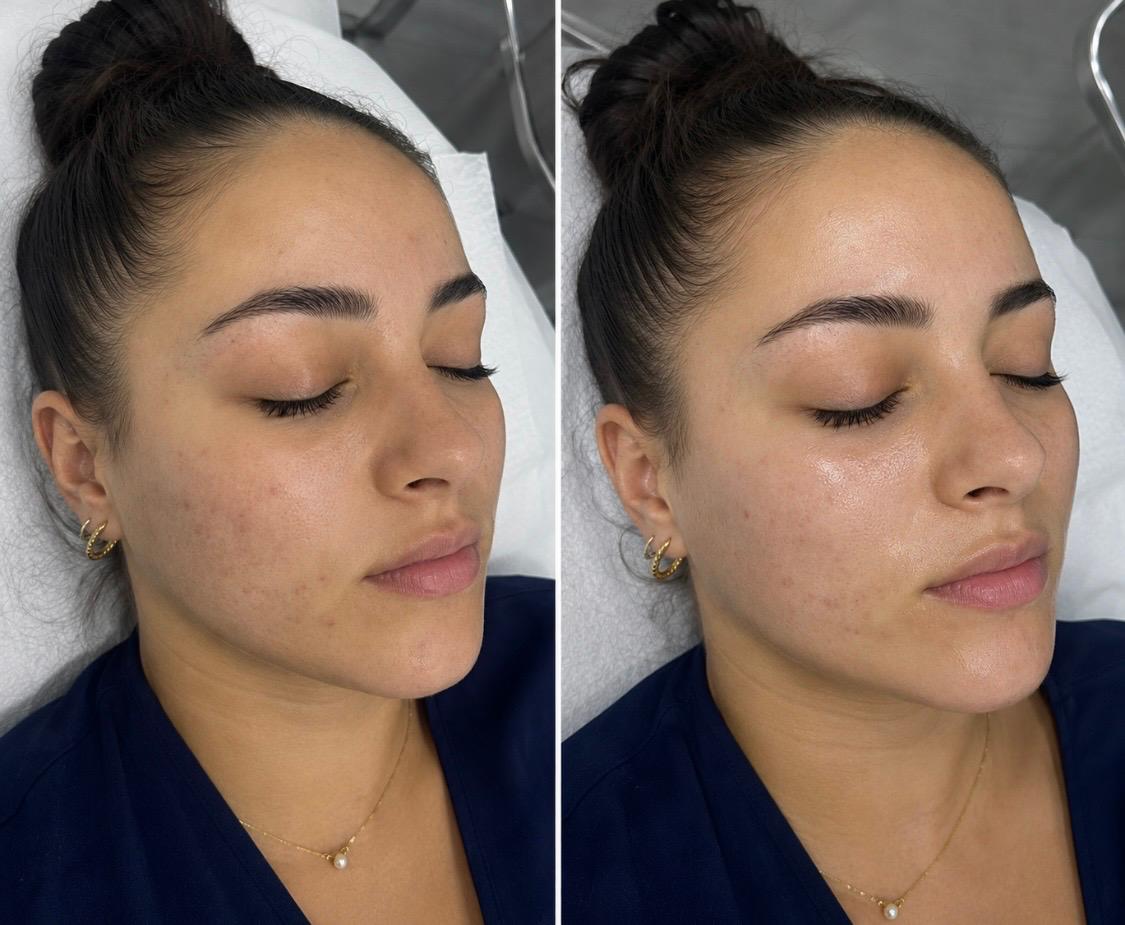
Hydrodermabrasion is a facial that uses a water-based solution and gentle suction to exfoliate the skin, clear out congested pores and infuse hydrating serums in a single treatment.
It is often called a hydro facial. Instead of crystals or a rough tip, the treatment uses a flow of liquid through a specialised wand, which makes it one of the gentlest ways to exfoliate.
The suction lifts away dead skin, oil and debris from the pores, while hydrating serums are delivered straight into freshly cleansed skin.
What Does a Hydrodermabrasion Facial Involve?
A hydrodermabrasion facial usually involves cleansing, exfoliation, extraction and hydration, carried out in stages with the same wand during one appointment.
Most clients find it relaxing, with a cool, gentle suction sensation. There is no downtime, so you can return to your day straight away with skin that looks fresh and plump.
Because it combines exfoliation and hydration, it is sometimes described as a hydro microdermabrasion facial. It suits most skin types, including sensitive and dehydrated skin.
What Is Microdermabrasion?
Microdermabrasion is a facial that exfoliates the skin physically, using a fine diamond-tipped or crystal wand with suction to remove the outer layer of dead skin cells.
Think of it as a more traditional, slightly firmer exfoliation than hydrodermabrasion. The wand buffs the surface while suction lifts away the dead cells.
Microdermabrasion Benefits
The main microdermabrasion benefits are smoother texture, a brighter complexion, refined pores and better absorption of skincare products.
A course of sessions can also soften the look of fine lines and mild uneven tone. The suction boosts circulation, which many clients find gives an instant glow.
Mild redness for a few hours is normal. It is a good choice for normal, oily or thicker skin that feels rough or dull.
What Is Dermaplaning?
Dermaplaning is a facial treatment that uses a sterile surgical blade, held at a gentle angle, to remove dead skin cells and fine facial hair from the surface of the skin.
That fine hair, often called peach fuzz, can trap oil and make makeup sit unevenly. Removing it, along with dead skin, leaves the face noticeably smoother.
Here is a common worry worth clearing up. Dermaplaning does not make hair grow back thicker or darker. Fine facial hair grows back exactly as it was.
Dermaplaning is not suitable over active acne or inflamed breakouts, as it can irritate the skin and spread bacteria.
Dermaplaning vs Microdermabrasion: Which Is Better?
In the dermaplaning vs microdermabrasion comparison, dermaplaning is better for smoothness and removing facial hair, while microdermabrasion is better for buffing rough texture and boosting circulation.
Both brighten the skin and help products absorb. The difference is the method: one shaves away the surface, while the other gently sands and lifts it.
If you love a flawless makeup base, dermaplaning is hard to beat. If your skin feels rough and your pores look congested, microdermabrasion may suit you better.
Ready for fresher, smoother skin?
View Our FacialsHydrodermabrasion vs Microdermabrasion: Which Should You Choose?
Hydrodermabrasion is usually the better choice for sensitive, congested or dehydrated skin, while microdermabrasion suits normal or oily skin that needs a firmer exfoliation.
So how do you decide? Think about what your skin needs most right now: hydration and decongestion, firmer exfoliation, or a smooth, hair-free surface.
If you are not sure, that is completely normal. We will look at your skin at your appointment and recommend the facial that fits, or a combination over a few visits.
How Often Should You Have These Facials?
Most clients benefit from these facials every four weeks or so, which matches the natural renewal cycle of the skin.
Skin cells renew roughly every 28 days, so a monthly appointment keeps dead cells from building up again. Before a special event, booking a few days ahead gives your skin time to settle and glow.
Are These Facials Right for Deeper Concerns?
These facials work on the surface of the skin, so deeper concerns such as acne scarring or loss of firmness usually respond better to collagen-stimulating treatments.
If texture and scarring are your main concerns, read our guide to microneedling vs chemical peel, which covers treatments that work more deeply.
Hydrodermabrasion or Another Facial? Making Your Choice
Choose hydrodermabrasion for hydration and congested pores, microdermabrasion for rough texture and dermaplaning for the smoothest surface and makeup finish.
Hydrodermabrasion, microdermabrasion and dermaplaning all leave the skin fresher and brighter, but each has its own strengths. Hydrodermabrasion hydrates and decongests, microdermabrasion buffs and brightens, and dermaplaning smooths the surface for a flawless finish.
As an aesthetics clinic in the Birmingham area clients return to month after month, our team in Oldbury will help you choose the facial that suits your skin best.
Frequently Asked Questions
Is hydrodermabrasion good for sensitive skin?
Yes, hydrodermabrasion is one of the gentlest exfoliating facials and usually suits sensitive skin, as it uses water-based exfoliation rather than an abrasive tip.
Does microdermabrasion hurt?
Microdermabrasion does not usually hurt, and most clients describe it as a light scratching or suction sensation.
Can I wear makeup after dermaplaning?
Most clients can wear makeup after dermaplaning, although we suggest waiting a few hours and using clean brushes, as the skin is freshly exfoliated.
Which facial is best before an event?
Hydrodermabrasion and dermaplaning are popular before events because they have little or no downtime and give an instant glow.
Find the Facial Your Skin Needs
Tell us how your skin feels and we will match you to the facial, or combination, that suits it best.
View Our Facial Treatments
